

The Challenge: Reducing Risk in High-Intensity Taxi Operations
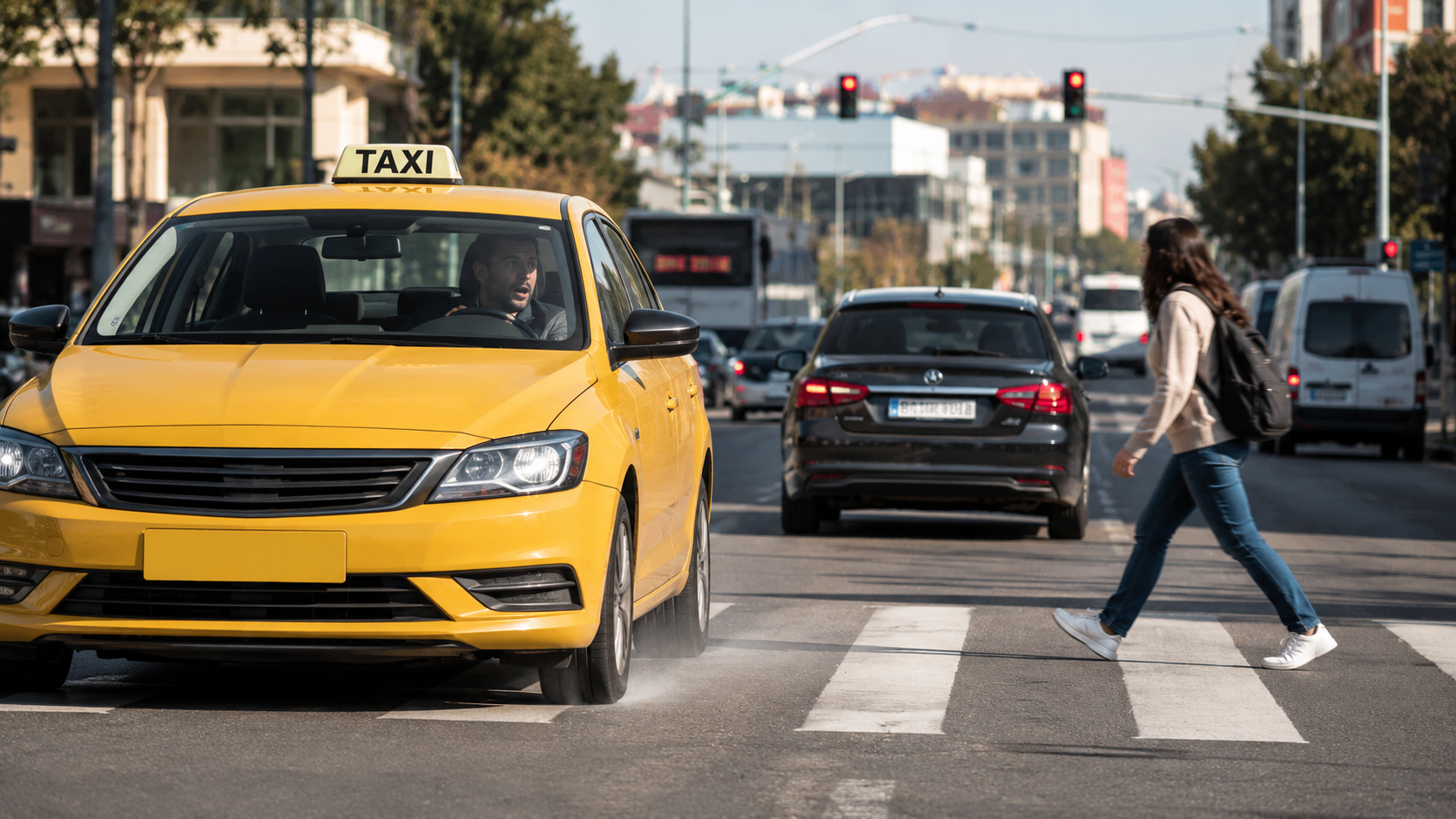
Urban taxi drivers work under sustained pressure. Long shifts and high trip volumes can increase fatigue, while dense traffic leaves little time to react to a vehicle braking suddenly, a pedestrian entering the road, or an unexpected change in traffic flow.
Taxi fleets operate in one of the most demanding urban mobility environments. Drivers spend long hours navigating congestion, frequent stops, sudden lane changes, pedestrians, and other unpredictable road conditions. Growing competition and compressed operating margins can further extend working hours and intensify safety pressure, making accident prevention closely tied to cost control. When fatigue, distraction, or delayed reactions enter the picture, a routine shift can quickly turn into a serious safety incident.
The Shenzhen operator therefore needed a way to reduce accident frequency at the source, while supporting a large fleet in daily, high-frequency service. The objective was not simply to generate more alerts. It was to help drivers respond earlier, assist them when reaction time was insufficient, and give managers usable information for ongoing safety improvement.
The Depolyment: An AEBS-Centric Collision Mitigation Solution
Streamax deployed an AEBS-centric solution across 2,500 taxis. The system combines forward-facing cameras, millimeter-wave radar, Driver Monitoring System (DMS) cameras, AI-based analysis, SafeGPT-based risk assessment where configured and a fleet management platform.
Together, these components connect what happens on the road, what happens inside the cab, and what fleet managers need to do next. This creates a practical safety loop:
-
Detect road and driver risks in real time
-
Warn the driver before a dangerous situation escalates
-
Provide braking assistance when a collision risk becomes critical
-
Record safety events and supporting video evidence
-
Use fleet data to guide coaching, scheduling, and management decisions
How the Streamax Solution Helped Reduce Accidents
1. Detecting Collision Risks Earlier
Forward-facing cameras and radar monitor the road ahead for potential collision risks. By combining visual and radar inputs, the system can assess changing traffic conditions and identify hazards that require the driver's attention.
Earlier detection gives drivers more time to respond in stop-and-go traffic and other complex urban scenarios. Instead of relying entirely on human reaction, the vehicle adds a continuous layer of risk awareness throughout the shift.
2. Assisting Drivers During Critical Moments
When the system identifies an imminent collision risk and the driver's response is insufficient, AEBS can provide braking assistance. This is particularly important when fatigue, distraction, or a sudden road event reduces the time available to react.
AEBS does not replace the driver. It provides an additional safeguard during the brief but decisive moments in which delayed braking can lead to a collision.
3. Identifying Fatigue and Distracted Driving
DMS cameras monitor driver status and can identify signs of fatigue, distraction, and other unsafe behaviors. This allows the system to address both sides of collision risk: the external road environment and the driver's ability to respond to it.
Over time, event data also helps managers recognize recurring patterns, such as repeated fatigue events, frequent harsh braking, high-risk routes, or drivers who may benefit from targeted coaching.
4. Turning Safety Events into Management Action
Alerts alone do not create a safer fleet. Operators also need to understand what happened, why it happened, and how to prevent it from happening again.
The Streamax management platform brings together incident video, braking events, driver safety performance, device status, and operational reports. Where configured, SafeGPT-based risk assessment can further support this workflow by correlating collision, fatigue, distraction, and driving behavior events across drivers, routes, and shifts. Rather than creating another layer of isolated alerts, it helps managers identify repeated risk patterns and prioritize follow-up actions.
This links vehicle-level intervention to fleet-level improvement: risk detection leads to driver intervention, event review, targeted action, and measurable operational change.
The Results: Fewer Accidents and Lower Annual Costs
After the solution was deployed across the 2,500-vehicle fleet, the operator recorded:
-
About a 30% reduction in the annual accident rate
-
Approximately $500 less in annual operating and insurance-related costs per vehicle
-
Greater visibility into road risks and driver behavior across the fleet
- A more structured process for reviewing incidents and improving safety performance
At fleet scale, even a modest reduction in accident frequency can prevent substantial repair costs and downtime. The Shenzhen deployment demonstrates the additional value of connecting AEBS with driver monitoring and operational management: fleets can address immediate collision risks while also improving the conditions and behaviors that influence long-term safety performance.
From Reactive Accident Handling to Proactive Fleet Safety
The Shenzhen case offers a replicable model for other taxi operators facing similar pressures. A collision mitigation strategy is most effective when sensing, intervention, evidence, and management action work as one system.
With Streamax, safety becomes part of daily fleet operations rather than a response that begins after an accident. Drivers receive support when risks emerge, managers gain evidence for targeted decisions, and operators can connect safety improvements directly to cost control and vehicle availability.
For taxi fleets, that makes proactive safety more than a compliance measure. It becomes an operational advantage.