The Streamax Passenger P3D Intelligent Statistics System overcomes traditional data blind-spots in bus fleet operations by delivering full origin-destination (OD) insight through accurate boarding/alighting detection and onboard edge analytics. This empowers operators with payment-agnostic passenger flow data — enabling optimized route planning, cost reduction, and improved service quality, based on complete and reliable ridership intelligence.
Many bus systems today still rely on fare-collection or tap-on data, which typically record only boarding events. Alighting data, cash riders, and transfer flows remain largely invisible, distorting actual passenger journeys. This fragmented view prevents transit agencies from understanding true demand, impairing efficient route design and resource deployment. The shift now must be toward holistic journey analytics — where every boarding, every exit, every movement feeds into planning with full transparency.
Bus operators routinely face critical, intertwined challenges:
Incomplete Demand Visibility — Fare-collection data fails to reveal cash passengers, alighting stops, and transfers; resulting in inaccurate OD matrices and skewed demand estimates.
Inefficient Resource Deployment — Without real-time or historical OD data, bus scheduling and deployment rely on rough estimates or outdated assumptions — causing overcrowding on busy lines and under-utilization on others, thereby wasting fuel, labour, and capital.
Costly and Error-Prone Manual Counting — Traditional manual headcounts or surveys are labor-intensive, slow, prone to human error, and cannot support dynamic decision-making in modern transit operations.
The Passenger P3D system from Streamax tackles these problems with a solution grounded in real-world operational needs:
True Passenger Flow Tracking — Advanced sensors/cameras combined with onboard algorithms detect and distinguish boarding vs. alighting events reliably, avoiding double-counting and generating accurate stop-level load data. This aligns with recent research validating video-based or sensor-based automatic passenger counting (APC) as feasible and accurate in real transit settings.
Onboard Real-Time Analytics & Alerts — Edge-processing enables real-time load factor monitoring and alerts for overcrowding or demand surges, supporting dynamic dispatch adjustments and proactive congestion management.
Adopting Passenger P3D yields tangible operational benefits:
Cost Reduction — By aligning vehicle deployment with verified demand, operators can cut unnecessary fuel and labor costs associated with under- or over-deployment.
Service Quality Improvement — Balanced loads, reduced wait times, less overcrowding — boosting rider satisfaction, retention, and system reliability.
Evidence-Based Planning — Reliable OD analytics enable agencies to shift from intuition to data-driven decisions, facilitating informed route design, capacity planning, and long-term network optimization.
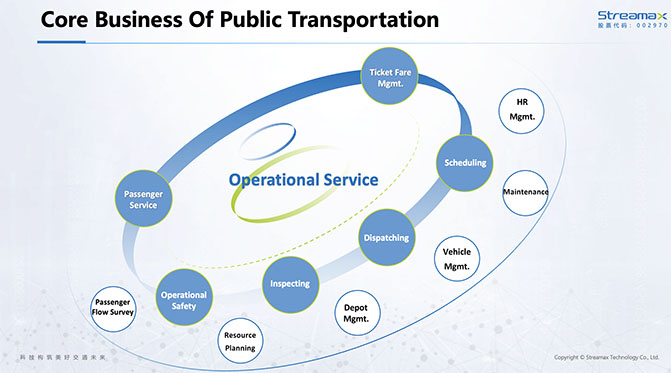
As public transit evolves under pressure for efficiency, sustainability, and rider satisfaction, complete passenger journey visibility becomes a critical differentiator. Streamax’s Passenger P3D is not just a counting tool — it’s a foundational engine for intelligent, resilient, and adaptive transit networks. With full journey intelligence, fleets can transition from reactive fixes to predictive, optimized operations — turning today’s ridership data into tomorrow’s competitive advantage.
Chen, X., Cheng, Z., & Sun, L. (2024). Bayesian Inference of Time-Varying Origin-Destination Matrices from Boarding/Alighting Counts for Transit Services. arXiv.
Liu, X., Van Hentenryck, P., & Zhao, X. (2019). Optimization Models for Estimating Transit Network Origin-Destination Flows with AVL/APC Data. arXiv.
Hsu, Y.-W., Chen, Y.-W., & Perng, J.-W. (2020). Estimation of the Number of Passengers in a Bus Using Deep Learning. Sensors, 20(8), 2178.
“Video-based automatic people counting for public transport: On-bus versus off-bus deployment.” Computers in Industry, 2025.
Su, P., & Dai, Z. (2013). Bus Passenger Origin-Destination Matrix Estimation Using Available Information from Automatic Data Collection Systems in Chongqing, China. Advanced Materials Research, 779-780, 878–889.
*Product performance, specifications, and data are based on theoretical calculations. Actual performance may vary due to production batches, software versions, use cases, and operating environments.
*Product features, functions, and services may differ by region in accordance with local laws, regulations, and market conditions. Actual availability and appearance vary by region.
*All product-related information is for reference only and does not constitute a legally binding commitment, warranty, or representation. Streamax reserves the right to modify product details at any time without prior notice.
*All product performance, specifications, and other related information are subject to the actual product.
*All content on this website, including but not limited to text, images, videos, graphics, logos, and layout design, is protected by applicable laws and is the property of Streamax or its respective rights holders. No part of this website may be reproduced, distributed, or used for commercial purposes without prior written permission.
For questions related to product, service, or to report any infringement, please contact us at: Branding@streamax.com