

For more details, watch the recording of our Low Bridge Webinar
Global Bridge Strike Trends and Industry Pain Points
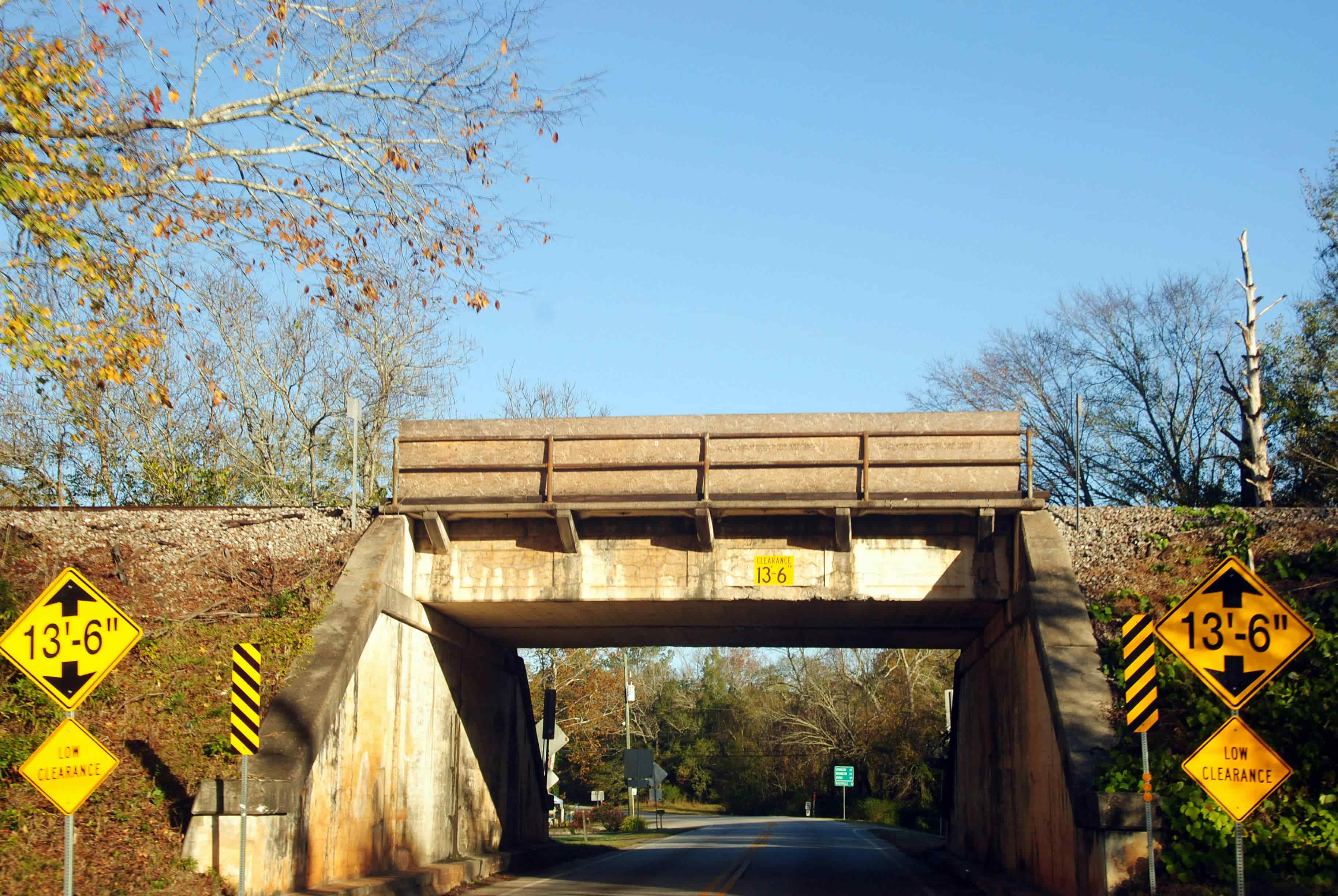
Analyzing accident data across different geographic regions reveals distinct patterns in bridge strikes, providing a basis for developing effective technical interventions. In the UK, strikes peak in October, coinciding with the pre-Christmas logistics surge. The majority of impacts occur between 10:00 am and 11:00 am, reflecting the impact of high-intensity operational pressure on driver attention. The table below identifies the locations where strikes recur most frequently, demonstrating that passive signage alone is often insufficient.
|
Top 5 Most Hit Bridges in the UK (2024-2025) |
||||
|
Rank |
Bridge ID |
Route |
Location |
Annual Strikes |
|
1 |
WNS/3 |
WCS |
Watling Street, A5, Hinckley |
22 |
|
2 |
ECM1/243 |
EC |
Harlaxton Road, Grantham |
18 |
|
3 |
BGK/1568 |
ANG |
Stuntney Road, Ely |
15 |
|
4 |
EMP/1816 |
ANG |
Stonea Road |
15 |
|
5 |
BML1/2/29 |
WEX |
Lower Downs Road, Wimbledon |
15 |
In the United States, bridge strikes are a significant traffic management challenge. Data from New York State shows that over 800 bridge strikes occurred within a two-year period. Currently, U.S. lawmakers are advancing the Bridges Not Bumpers Act of 2025, which aims to establish a central data repository and mandate the integration of bridge height information into truck-specific navigation tools.
The Legal and Financial Consequences of Bridge Strikes
The adoption of low bridge detection technology offers a proactive response to escalating legal risks and shifting regulatory landscapes, providing clear economic benefits to operators.
In the UK, the legal consequences of bridge strikes have intensified. Network Rail now seeks to claim 100% of economic losses from hauliers, including repair costs and compensation for train delays. Because railway systems are sensitive to structural displacement, any strike can lead to severe operational risks. Furthermore, in cities like London, compliance with the Direct Vision Standard (DVS) and the installation of Progressive Safe Systems (PSS) have become prerequisites for obtaining operating permits.
From a regulatory and economic standpoint, the revision of the EU General Safety Regulation (GSR II) mandates that commercial vehicles be equipped with advanced safety systems. Streamax solutions comply with these requirements and have achieved global certifications including E-Mark and CE-EMC. A critical advantage is the Independent Technical Unit (STU) certificate, which can shorten the certification process for vehicle manufacturers by 2 to 3 months and significantly reduce testing costs. Beyond low bridge detection, Streamax offers a full ecosystem of fleet safety solution designed to further enhance fleet efficiency and safety.
What Technology Is Required to Actually Prevent Bridge Strikes?
The Streamax solution is not a standalone hardware unit but an extension of the Fleet Management System (FMS) and Advanced Driver Assistance Systems (ADAS). It utilizes a multi-layered approach to hazard detection.
-
AI+RFID Dynamic Vehicle Height Sensing: This pioneering innovation uses specific frequency RFID wireless transmission to automatically obtain real-time vehicle height in drop-and-hook (trailer swap) scenarios. This eliminates the risk of human error in manual height configuration.
-
RFID Signal Chain Health Diagnosis: To ensure the reliability of the core data source, the system includes a safety mechanism for periodic signal monitoring. It performs self-diagnostics on the RFID link — if a signal timeout is detected, a backup alarm immediately prompts the driver to troubleshoot the connection.
Hardware Performance and Specifications
Streamax hardware is engineered for automotive-grade reliability, capable of stable operation in extreme temperatures, high vibration, and complex electromagnetic environments.
|
Component |
Functional Description |
|
Smart AI Camera C40W |
Responsible for data collection, intelligent analysis, and outbound alarm information. |
|
R-Watch Display |
Output corresponding sound and icon alarm information based on alerts provided by the C40W. |
|
RFID |
Automatically obtains real-time vehicle height values and supports the bridge hole alarm algorithm. |
|
MDVR |
Powers the entire system, provides GPS info to the C40W, and manages data backup/upload. |
|
GPS |
Provides precise GPS data to the C40W to assist in its bridge height recognition algorithm. |
Optimizing Human-Machine Interaction (HMI)
To prevent "warning fatigue," Streamax has optimized its algorithms to ensure high alert accuracy and minimal false positives. The system's AI vision, powered by the C40W camera, is designed to recognize a wide variety of infrastructure, including triangle-shaped signs, square-shaped signs, roadside height indicators, and bridge-end height indicators
-
AI Perception and Multi-Source Fusion: By integrating contour-based deep learning, OCR character recognition, and scene semantic parsing, the system accurately perceives bridge structures and extracts height limit values. This is further enhanced by Multi-source Data Fusion, performing triple validation between AI Gantry recognition, 10Hz GPS positioning, and an exclusive low-bridge database. The system intelligently filters bridges that pose no risk to the specific vehicle, revolutionizing alert accuracy.
-
Data-Driven Alert Precision: The system utilizes real-time vehicle data, combined with vehicle driving direction and operational status, to comprehensively judge alarm triggers. Spatial geometric algorithms confirm if an object is within the vehicle’s vertical path, only alerting when clearance is insufficient.
-
Tiered Alert Mechanism:
-
Visual Pre-warning: An amber marker appears on the display when the vehicle is at a safe distance from a bridge.
-
Mandatory Intervention: If a high collision risk is detected, the system triggers high-decibel voice alerts and red visual flashing to allow the driver ample time to react.
The Future of V2X Integration and Strategic Fleet Safety
The future of bridge strike prevention lies in Vehicle-to-Everything (V2X) integration. Bridges may soon be equipped with LiDAR and ALPR sensor fusion to measure passing vehicles against digital permit databases in real-time, providing the vertical spatial awareness critical for L4 autonomous freight. Ultimately, bridge strikes represent a fundamental conflict between fixed infrastructure and dynamic logistics. The Streamax solution marks a definitive shift toward the deep fusion of AI vision and geofencing. For fleet operators, deploying these systems is a strategic move to protect assets and brand reputation while complying with UK bridge strike prevention guidelines. As these technologies integrate into wider smart city networks, the frequency of collisions can be fundamentally curtailed through robust digital oversight.