检测到并清除了危险字符!
Home > Resources > Blog > Technology

PT Cloud: Elevating Efficiency and Safety through Integrated Transit Analytics

Clara Feng2026 03-26

Public Transit

Edge AI

Fleet Management

PT Cloud: Elevating Efficiency and Safety through Integrated Transit Analytics

Breaking Data Silos in Public Transit

Public transit systems often struggle with fragmented platforms and scattered operational data. Dispatching systems, passenger information displays, video surveillance, and scheduling tools are widely deployed, yet most cities face delays, overcrowding, and inefficient fleet utilization.

Information trapped in silos makes it difficult to respond in real time or generate actionable insights. To transform equipment digitalization into operational intelligence, PT Cloud unifies these data streams, enabling operators to manage fleets dynamically, optimize routes, and maintain reliable service.
 

PT Cloud Capabilities: Turning Data into Action

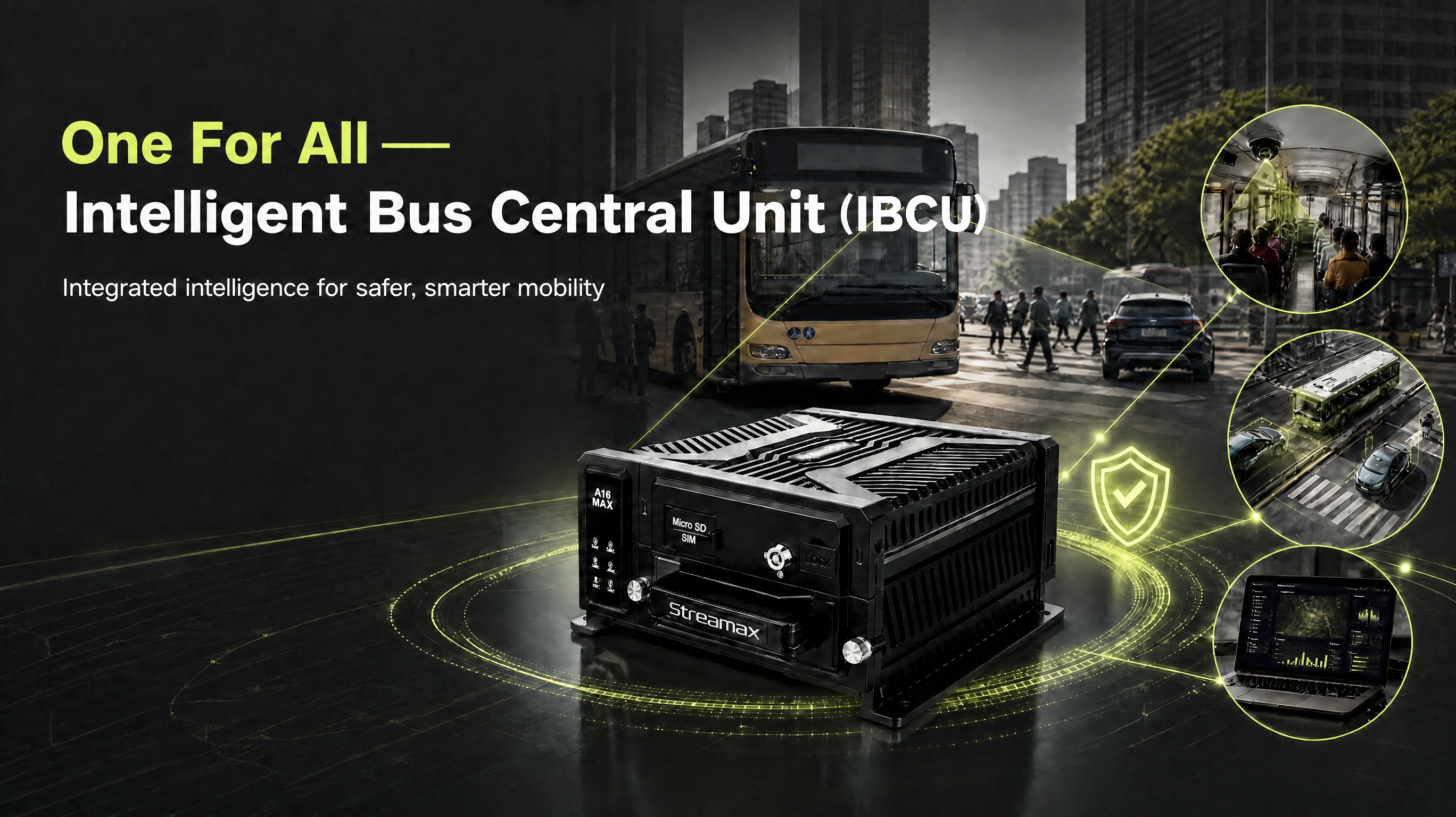
PT Cloud is a unified platform that integrates data from onboard hardware with cloud-based analytics to deliver actionable insights for transit operations. By connecting video, sensor, and vehicle data, it transforms fragmented information into a centralized system, enabling capabilities such as real-time monitoring, data-driven decision-making, and proactive safety management. 

Data-driven Scheduling

Transit operators increasingly rely on data-driven decisions over experience-based choices. Delayed responses, inconsistent dispatcher decisions, and long passenger wait times have long plagued transit operations. Real passenger OD analytics, stop heatmaps, and time-based flow patterns are essential to optimize schedules and allocate resources efficiently.

To solve these inconveniences, PT Cloud automatically recalculates schedules in seconds when disruptions occur, restoring stable headways and ensuring continuous service. Dispatchers can now view the full line on a single dashboard, combining compliance, performance, and operational data for instant decision-making.

Passenger OD Analytics

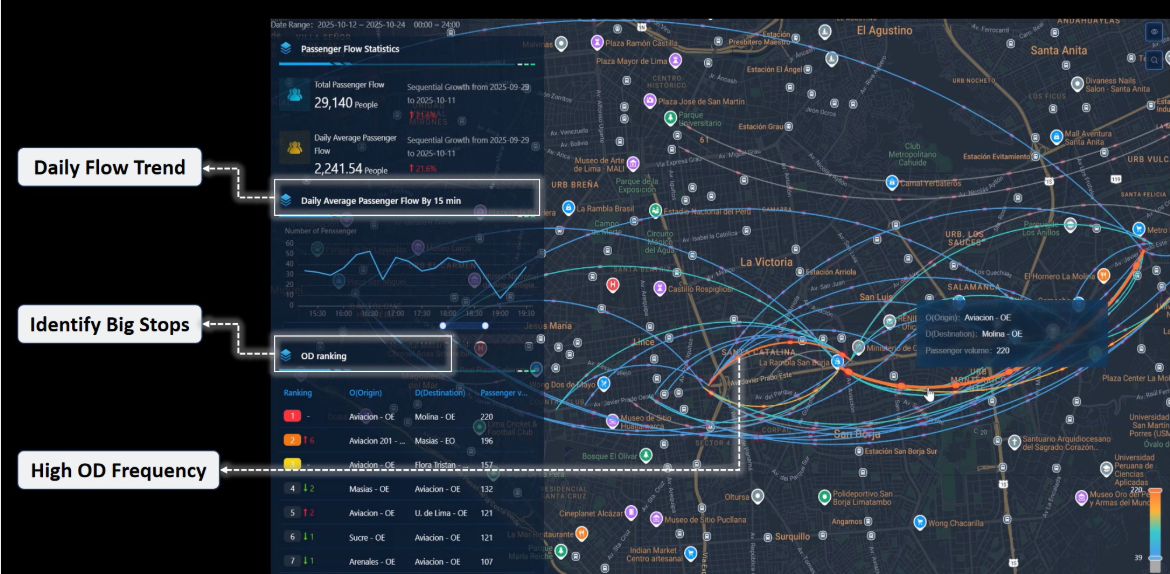
With Passenger Flow Data, operators can identify crowded segments and deadhead periods, and compare actual passenger numbers against capacity. Daily flow trends, high-frequency OD pairs, and major stops show where demand is highest, enabling operators to deploy routes effectively and optimize network planning.

Real-time Dispatching

Real-time monitoring and rapid response are increasingly critical. Operators cannot rely on post-event reporting to address disruption, instant visibility and action are required to maintain service reliability and passenger satisfaction.

In response, PT Cloud detects service deviations, congestion, or delays immediately, allowing operators to intervene proactively. This functionality reduces complaints, prevents overcrowding, and allows flexible reallocation of vehicles across the network based on live conditions.

Proactive Safety Management

Predictive risk detection and driver behavior monitoring provide operators with the tools to maintain safety standards while improving operational efficiency. By identifying high-risk scenarios in advance, PT Cloud helps reduce accidents and enhances passenger confidence in daily transit services.

Edge AI Integration

Governments and transit operators increasingly expect greater transparency, measurable performance, and seamless system integration to optimize public resources and support better decision-making.

PT Cloud meets this need by bridging the gap between onboard hardware and cloud analytics. Through its three-layer architecture and open APIs, the platform standardizes fragmented systems into a single, scalable environment, giving operators the flexibility to evolve their strategies and future-proof their entire network.


Measurable Impact for Operators and Passengers

Operators using PT Cloud have reported significant improvements in fleet management and operational efficiency. For example, a transit operator in Italy deployed PT Cloud to unify onboard devices and passenger flow data. Real-time operational insights enabled optimized vehicle allocation, reduced manual reporting, and improved service reliability. Passengers benefited from more consistent trips, demonstrating that an integrated platform can transform fragmented systems into truly intelligent transit operations.

Frequently Asked Questions

For system integrators, how does PT CLOUD address data silos and complex system interfaces?

PT CLOUD offers an integrated edge-to-cloud platform architecture that consolidates fragmented systems and device data, reducing integration complexity and ongoing maintenance burdens.

How can transit operators use PT CLOUD to improve efficiency and reduce accident rates?

PT CLOUD enables real-time dispatching and proactive safety management, helping operators enhance fleet efficiency while reducing accident risks. Through data-driven capacity matching and automated data integration, operators can lower labor costs, minimize empty runs, and achieve greater efficiency alongside more stable service.

How can government transportation authorities use PT CLOUD to address inaccurate subsidy allocation and challenges in network planning?

PT CLOUD provides a unified data platform that delivers real, quantifiable operational insights, enabling more accurate and transparent subsidy allocation. By analyzing passenger flow data, it also supports route optimization and helps planning departments make decisions based on real demand rather than assumptions.

Trending

Rethinking Real-Time Fuel Management in Heavy Equipment

Rethinking Real-Time Fuel Management in Heavy Equipment

Streamax’s real-time fuel monitoring solution helps heavy equipment fleets track consumption with 95%+ accuracy, detect theft instantly, and reduce fuel loss through wireless, non-invasive AIoT technology.
From Event Detection to Behavioral Intelligence: The Future of Fleet Safety

From Event Detection to Behavioral Intelligence: The Future of Fleet Safety

Why event-based alerts fail. Learn how behavioral intelligence + video telematics reduce false alarms, predict fatigue, and enable proactive fleet safety.
Why the Camera Is Becoming the New Telematics Hub?

Why the Camera Is Becoming the New Telematics Hub?

Discover how AI-powered cameras are replacing separate GPS trackers to become the central telematics hub. Reduce fleet costs, unify data, and improve safety with one integrated device.
Get the latest from Streamax

Subscribe now

Submit your email below to stay
updated with the latest Streamax
insights and solutions.

Submit