

Smartwatch-Based Driver Fatigue Detection for Mining Fleets: Extending Safety Beyond Vision
Learn how Streamax combines smartwatch physiological sensing with camera monitoring to support real-time driver fatigue detection in mining fleets.


Subscribe now
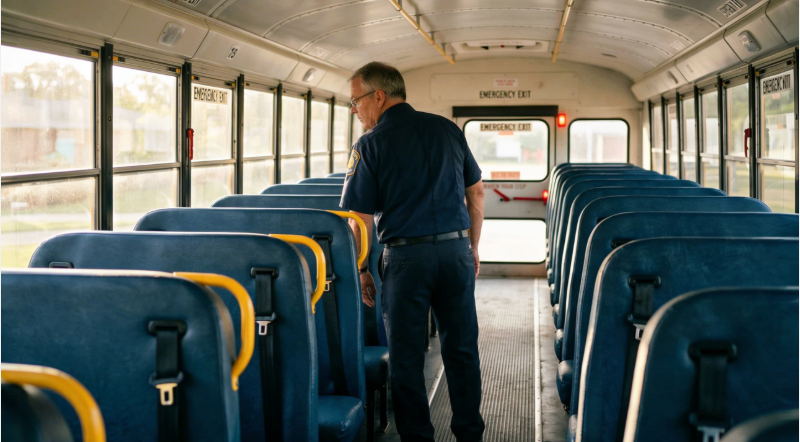
Students left-behind incidents remain one of the most serious safety risks in school bus operations worldwide. These incidents typically occur after a route is completed, when a driver shuts down the vehicle and exits without realizing that a student is still inside the bus. In extreme weather conditions—especially high heat or severe cold—the consequences can be fatal.
Research shows that temperatures inside a closed vehicle can rise rapidly — even on moderate days the interior can exceed 43 °C — creating a high‑risk environment for heat‑related illnesses. If a student is left inside under these conditions, they face serious health threats such as heatstroke, suffocation, and even death within a short period. As a result, many countries and regions with school bus operations have introduced strict regulations requiring drivers to check the vehicle before locking it.
While driver inspection procedures are necessary, they are not always sufficient. In real-world operations, a driver may forget to perform the final check, or a student may fall asleep on a seat and remain unnoticed. To effectively eliminate these risks, school bus safety must move beyond procedural compliance and toward system-level protection.
Streamax addresses this challenge with a comprehensive Child Check System designed to prevent students from being accidentally left on school buses through a combination of procedural enforcement, sensor-based detection, and AI-powered analysis.
Within the first layer, human check serves as the foundational safeguard. After the vehicle is turned off, the system automatically broadcasts a voice reminder instructing the driver to conduct a cabin inspection. The driver must walk to the rear of the bus and press a dedicated inspection button, confirming that no students remain onboard. If the button is not pressed within a defined time window, the system triggers an alarm and sends an alert to the backend platform for immediate follow-up.
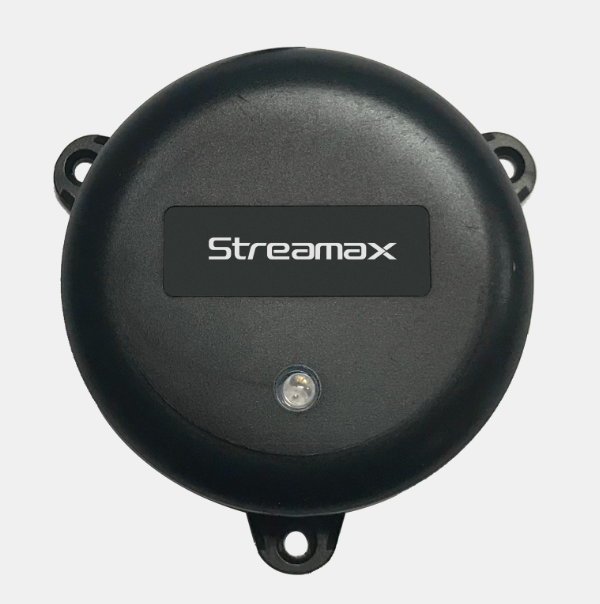
To address scenarios where human inspection may fail, Streamax integrates motion sensors. These sensors detect movement inside the bus. If a student moves inside the bus, the system is automatically activated and sends an alarm to notify management personnel, enabling timely rescue.
Additionally, using AI algorithms, the system can identify whether a student is still seated on the bus—even if the student is asleep and not moving. This capability closes a critical safety gap that traditional motion-based systems cannot cover, ensuring that both moving and stationary students are protected.
Streamax’s Child Check System has been successfully deployed in real-world school bus operations. In the United Arab Emirates, the inspection button combined with motion sensor solution has been installed on more than 8,000 school buses, significantly enhancing post-route safety management. In China, an advanced configuration integrating inspection buttons, motion sensors, and AI-based seat detection has been deployed on over 300 school buses in Beijing, demonstrating the system's effectiveness in complex urban environments. Similarly, in Hunan Province, over 8,000 buses have been equipped with the solution.
By combining human procedures with automated detection and intelligent alerts, Streamax transforms students safety from a rule-based requirement into a technology-backed guarantee. The Child Check System offers a reliable way to help prevent students from being left behind on vehicles, supporting safety in student transportation systems.
For more information, please contact us.
Do the Motion Sensor and AI detection work continuously?
In the Child Check System, all three subsystems only start working after the vehicle is turned off.
Are the three methods in the Child Check System related?
They are not related to each other. The three subsystems can be deployed independently or together.

Subscribe now

