Why final-mile school bus safety needs verification
School buses are widely regarded as one of the safer forms of student transportation, but safety teams still manage serious operational risks. Crashes, illegal passing around loading and unloading zones, missed checks, driver fatigue, and human error can all create financial, legal, reputational, and operational exposure.
Public safety sources show why route-level discipline still matters. NHTSA school bus safety guidance describes school buses as one of the safest vehicles on the road, while noting that children face higher risk when approaching or leaving a bus. NSC school bus crash data also shows that many school-bus-related fatalities involve people outside the school bus itself.
For operators, the challenge is not only whether a policy exists. It is whether the policy is followed at the end of every journey, during busy handovers, under time pressure, and after routine routes that may feel familiar enough to invite shortcuts.
The risks that manual checks may miss
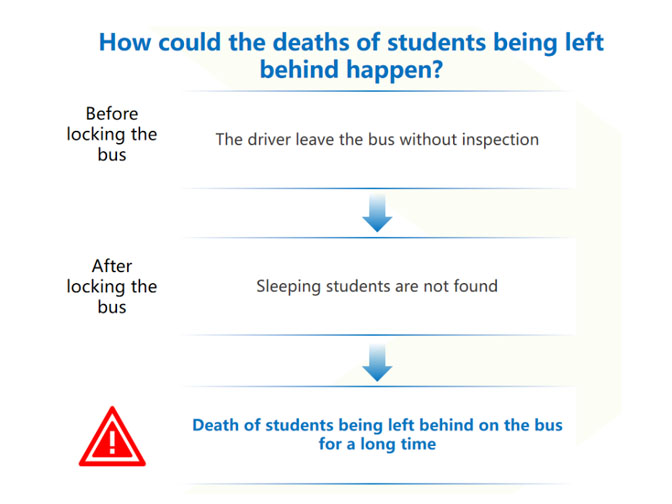
End-of-route oversight. A missed or rushed final check can leave the fleet without a verified record of what happened after the last stop.
Roadside exposure. Some school transportation incidents involve children outside the vehicle, especially near loading and unloading areas where other drivers may ignore stop signals or fail to notice students crossing.
Human-factor gaps. Even experienced drivers can be affected by fatigue, distraction, schedule pressure, or route changes. Manual compliance is necessary, but it is stronger when the system helps verify it.
Limited evidence after an event. If a fleet cannot easily show what happened, when an inspection was completed, or whether a warning was triggered, incident review and stakeholder communication become harder.
How Streamax supports proactive school bus safety
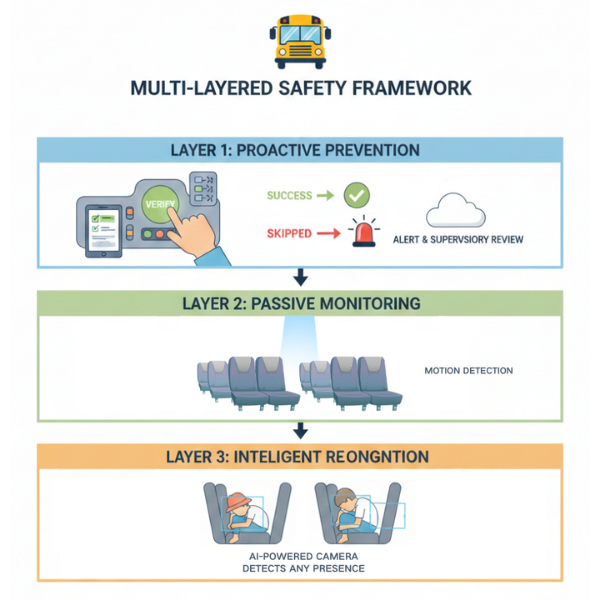
The Streamax School Bus Solution takes a verification-first approach to school bus fleet safety. The goal is not to replace the driver's responsibility. It is to make critical checks easier to perform, harder to skip, and easier to review.
-
Driver inspection enforcement can require an end-of-journey seat or aisle check. If the required check is missed, the system can trigger an alert so the fleet has a clearer record of whether the final inspection was completed.
-
Motion and occupancy detection can help identify signs of human presence inside the bus after shutdown. This adds another layer of awareness when a passenger is out of direct view or when the vehicle environment makes a manual check harder to verify.
- AI-assisted student detection can support recognition of partial body presence, unusual posture, or movement under challenging conditions such as low light or visual obstruction. For a narrower discussion of student omission scenarios, see Streamax's article on preventing students from being left on buses.
-
Driving status monitoring with SafeGPT can help fleets notice signs of fatigue, distraction, or unsafe driving behavior earlier in the route. When connected with driver coaching, these alerts can support more targeted follow-up instead of relying only on broad policy reminders.
What this changes for fleet operations
A verified workflow gives operators a clearer way to manage risk. Instead of treating school bus safety as a post-incident review process, fleets can build routine checks into daily operations and keep a more reliable record of exceptions.
That matters for several groups. Parents want confidence that the bus is checked before the driver leaves. Schools and regulators need evidence that safety procedures are followed. Fleet managers need a practical way to identify gaps without adding complicated manual steps to every route.
The value is operational as much as technical. A fleet that can document inspections, detect possible unattended passengers, and review driver risk patterns is better positioned to respond, coach, and improve over time.
From monitoring to prevention
Monitoring tells a fleet what happened. Verification helps show whether the right safety action took place at the right moment. For school bus operators, that distinction is important.
As safety expectations continue to rise, proactive verification can help fleets strengthen compliance, reduce avoidable oversight, and communicate more clearly with schools, parents, and other stakeholders. Streamax school bus safety technology is designed around that practical need: make the final check visible, make risk signals easier to act on, and help every route end with a more accountable safety process.